TN Legal News Now - News From the Tennessee Bar Association - Your fastest source of appellate court decisions, Supreme Court rules and orders changes, attorney general opinions and other Tennessee legal community news.
To view this email in a browser, click here.
Association Logo
TN Legal News Now
News From the Tennessee Bar Association


This legal news update is provided to you weekly by the Tennessee Bar Association as a service to Tennessee lawyers. TBA members receive these breaking legal news and court opinions daily. When you join the Tennessee Bar Association you will also receive this service each day. You can unsubscribe to this newsletter using the link at the bottom of this edition.
Today's News
article image

Registration Open for 37th Annual TBA Academy

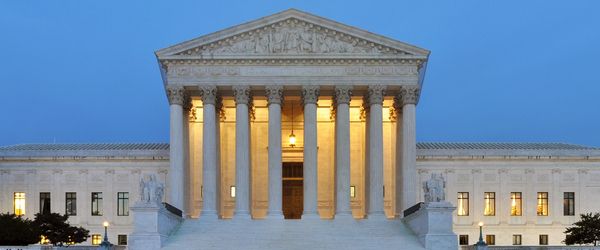
The annual TBA Academy offers an exciting opportunity for Tennessee attorneys to be admitted to practice before the U.S. Supreme Court. The 37th Annual Academy will take place Dec. 6-7 in Washington, D.C. A select group of Tennessee attorneys will be able to take part in a private ceremony before the court and earn three hours of CLE credit. The group will stay at the Hay Adams Hotel, where the TBA has obtained a special rate for participants. Registration materials must be submitted by Oct. 1. Learn more online or contact TBA Meetings Director Therese Byrne, 615-277-3208, with any questions.


BPR Offers Free Professional Development, New Form for Unidentified IOLTA Funds

The Board of Professional Responsibility recently announced the Tennessee Lawyer Self-Assessment Program, a free proactive management-based regulation (PMBR) program to help lawyers with professional development. The program is designed to mitigate risk, elevate competence and enhance the quality of legal services delivered to clients. Attorneys who participate will learn how to assess and address law firm management issues and professional obligations with the goal of preventing problems before they arise. Those who complete the program voluntarily will receive three hours of dual CLE credit. In addition, the Tennessee Lawyers’ Fund for Client Protection and the Board of Professional Responsibility report they now have a form attorneys can use to remit unidentified funds in their IOLTA account. The form can be downloaded here or from either agency’s website. Read more about the background on the form here.

article image

ABA to Offer New Resources for Homeless Courts

The ABA Commission on Homelessness and Poverty has been the driving force behind the movement to establish homeless courts, providing technical assistance, resources and training for jurisdictions interested in starting programs. According to the commission, there are now at least 50 such courts across the country that offer treatment-oriented diversionary proceedings in place of jail time for homeless-related crimes. To encourage additional jurisdictions to create homeless courts, the commission plans to develop an online toolkit over the next year. Learn more about the effort in the ABA Journal.

Chancellor: School Boards Association Subject to Public Records Act

Nashville Chancellor Patricia Head Moskal ruled yesterday that the Tennessee Public Records Act applies to the Tennessee School Boards Association (TSBA), finding that the association is the “functional equivalent” of a government agency. The case, Karrie Marren v. Tennessee School Board Association, focused on Marren’s request for records related to training of school board members, communication between board members and elected officials, and the association’s position statements on governance and allocation of public funds. TSBA provided some information but maintained it was not subject to the public records law since it is a private nonprofit. The court found that given the “totality of the circumstances of this case” — including the fact that TSBA receives government funding, performs a government function and has a close interrelationship with government agencies — the association should be considered a functional equivalent of government.

Black Clerks Feel Like ‘Unicorns’ Without Judges Like Them

The Court of Appeals for the Federal Circuit is the only federal U.S. appellate court that has never had a Black judge. There have been a small number of Black law clerks but several say they never saw a Black attorney argue a case while they worked there. Now that they are lawyers, they say it is rare to see a peer in the courtroom. Bloomberg Law interviewed eight former clerks who stressed they had very close relationships with the judges they clerked for, with several even saying that clerking was the best part of their career. Those interviewed expressed concern that the number of Black clerks will stay stagnant until there is more diversity among the judges on the court.

article image

Chattanooga Judge Named Young Lawyer Delegate to ABA House

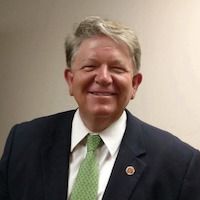
The TBA Board of Governors has selected Hamilton County General Sessions Judge Alexander McVeagh to fill the vacant position of Young Lawyer Delegate to the American Bar Association House of Delegates. McVeagh will fill the post vacated by Troy Weston, who resigned to move out of state. McVeagh also serves as East Tennessee governor on the TBA YLD Board, and is also president-elect of the Chattanooga Bar Association YLD. Currently Tennessee’s youngest judge, McVeagh was appointed by Gov. Bill Haslam in May 2017. He previously practiced with Chambliss, Bahner & Stophel, the Tennessee Public Defenders Conference and the Tennessee Senate Judiciary Committee.

article image

Memphis Lawyer Named to Disciplinary Hearing Committee

Memphis lawyer Lauren Holloway has been appointed a hearing committee member for Disciplinary District 9. In this role, she will review recommendations by Board of Professional Responsibility counsel as to dismissals, diversion and private informal admonitions against attorneys in her district. Holloway, an attorney with McAngus Goudelock & Courie, also recently was named a “Top 100” lawyer for Tennessee by National Black Lawyers. She joins Belmont Law professor Tracey Carter in the honor. 

article image

DA Group Taps Jones for Director

Gallatin attorney Guy Jones has been named executive director of the Tennessee District Attorneys General Conference, the Nashville Post reports. Jones has been serving as deputy director of the conference since 1997. He succeeds Jerry Estes. Jones is a graduate of Middle Tennessee State University and Nashville School of Law. “Our team could not imagine someone better for the executive director position than Guy,” District Attorney General and TDAGC Conference President Amy Weirich said. “He has been a vital asset to our team for over 20 years, and I know he’ll be instrumental in our continued growth.”

Applicants Sought for 28th Judicial District AG

The governor’s office is accepting applications to fill the post now held by retiring 28th Judicial District Attorney General Garry Brown. The appointee will serve until the next biennial election in August 2022. Applicants must have been residents of the state for five years and of the judicial district (which includes Crockett, Gibson and Haywood counties) for one year. Interested attorneys should submit a resume and cover letter to Lang Wiseman, Deputy and Chief Counsel to the Governor, State Capitol, First Floor, 600 Dr. Martin Luther King Jr. Blvd., Nashville, TN 37243 or by email by 5 p.m. CDT on July 24. View the announcement from the governor’s office.

 
article image

Legal Aid to Hold 3 Phone Clinics This Week

Legal Aid Society of Middle Tennessee and the Cumberlands will host three legal phone clinics this week for members of the public with questions about housing and renters’ rights, bankruptcy, medical bills, debt collection, domestic violence, applying for SNAP benefits and applying for unemployment benefits. Clinics will take place tomorrow from 11 a.m. to 1 p.m., Thursday from 3 to 4:30 p.m., and Saturday from 8:30-11 a.m. Those needing assistance may call 800-238-1443 during these times. To volunteer for a clinic, contact Andrae Crismon or Kendra Cheek or call 615-780-7131. See the list of clinics for the entire month.


Hamilton Courthouse Sees Potential Virus Exposure

The Hamilton County Health Department has warned of potential exposure to the novel Coronavirus recently at the county courthouse. "Case investigations have revealed that positive cases were in the courthouse during their infectious period during the June 25 to July 2 timeframe," the department said in a news release. "It is recommended that anyone who was at the courthouse during any of these days be tested for COVID-19 and monitor their symptoms." The Times Free Press reports on the story.

Memphis Immigration Court Set to Reopen in Late July

The federal government is targeting late July for reopening the Memphis Immigration Court, the Commercial Appeal reports. Hearings are now scheduled to begin after July 24. Memphis attorney Lily Axelrod, who represents an association of immigration lawyers, says she has contacted the local chief immigration judge several times to discuss safety precautions but has not heard back. The Executive Office for Immigration Review, which oversees the immigration courts, also has been largely silent on the issue of how courts can safely open. It has posted some guidelines, including that everyone in the court must wear a face mask and no one with a COVID-19 diagnosis or symptoms may enter the space. In related news, the National Law Journal reports that the National Association of Immigration Judges has filed a lawsuit arguing that the government is stifling judges’ rights to speak publicly on key issues, including the threat of COVID-19.


Hamilton County Lawyer Censured

Hamilton County lawyer Kent Thomas Jones received a censure yesterday from the Tennessee Supreme Court. Jones received a $2,000 flat fee for representing a client on a DUI. The client had signed a written fee agreement but the agreement did not state that the fee was nonrefundable. On the day of the client’s court date, Jones appeared late and was acting erratically. Court personnel removed him from the courthouse and he was charged with public intoxication, though the charges eventually were dropped. By email later that day, Jones agreed to provide a full refund of the fee. Two and a half years later, Jones has made three partial payments amounting to $1,650. The court directed him to pay the remaining $350 within 60 days. The court also found that Jones did not keep the fee in a trust account. His actions violated Rules of Professional Conduct 1.5, 1.15 and 8.4(b) and (d).


Disability Law Forum Live Next Friday

The TBA's 2020 Disability Law Forum is taking place virtually on Aug. 21. The program will cover a variety of topics, including ethical issues, legal technology and law office management tips. Additionally, vocational consultant Michelle McBroom Weiss will present a session on effective cross examination, transferable skills analysis and more; and Judge H. Scott Williams will provide a closer look at the Social Security disability hearing process. The program will offer three dual and two general hours of CLE credit. Thanks to Atlasware by Assure and Vista Points Special Needs Trust for sponsoring the program.

Reminder: Elder Law Forum This Friday

The TBA Elder Law Section will host the 2020 Elder Law Forum as a virtual event this Friday. The six-hour program will provide essential and practical material for elder law attorneys and those interested in learning more about this practice area. Four of the six hours will be presented with live speakers while the other two hours will be offered exclusively to forum registrants as two one-hour programs to watch on their own time — before or after the live event. Thanks to the sponsors for this program: Cumberland Trust, Krause Financial and Vista Points Special Needs Trusts.

 
Court Opinions

You can obtain full-text versions of these opinions by selecting the link below each opinion’s summary paragraph. Your email software should give you the option of reading the opinion online or downloading it to your computer or mobile device. Decisions from the 6th Circuit Court that are not designated for publication are not included in this report.

ANTONIO LANE, SR. v. SECUREMEDY, INC., ET AL

Court: TN Workers Comp Appeals Board

Attorneys:

Charlie Patrick, Memphis, Tennessee, for the employer-appellant, Securemedy, Inc.

Antonio Lane, Sr., Memphis, Tennessee, employee-appellee, pro se

Judge(s): GODKIN

Following a court-approved settlement of the employee’s claim for workers’ compensation benefits, the employee sought additional medical treatment for lumbar complaints that he contended should be provided as a result of the settlement agreement. The employer declined to authorize the treatment, and the employee filed a petition for benefits seeking additional medical care. Following a hearing, the trial court concluded that the parties’ settlement agreement did not exclude future medical care for any of the employee’s work injuries and ordered the employer to provide future medical treatment for the employee’s low back complaints. The employer has appealed. Tennessee Code Annotated section 50- 6-240(d) mandates that settlement agreements “compromising and settling the issue of future medical benefits” include a provision confirming that the employee has been informed of the potential consequences of the settlement, if any, with respect to Medicare and TennCare benefits and liabilities. Here, the parties’ settlement agreement did not include such a provision, and neither the parties nor the trial court addressed the applicability of section 50-6-240(d) to the parties’ settlement agreement. Without addressing the merits of the issues raised by the employer, we vacate the trial court’s order and remand the case for the trial court’s consideration of the applicability of section 50-6- 240(d) to the parties’ settlement agreement and the impact on this case, if any, of the absence of the statutory language from that agreement.

lanea_070720.pdf


STATE OF TENNESSEE v. NOVODNY YOUNG

Court: TN Court of Criminal Appeals

Attorneys:

Ronald G. Freemon (on appeal), Lawrenceburg, Tennessee; Travis B. Jones, District Public Defender; Mike Harris, Assistant Public Defender (at hearing), for the appellant, Novodny Young.

Herbert H. Slatery III, Attorney General and Reporter; Ruth Anne Thompson, Senior Assistant Attorney General; Brent Cooper, District Attorney General; and Gary Howell, Assistant District Attorney General, for the appellee, State of Tennessee.

Judge(s): EASTER

Defendant, Novodny Young, appeals after the trial court revoked his probation and ordered him to serve his effective eight-year sentence in incarceration. Because the trial court did not abuse its discretion, we affirm the judgment of the trial court.

youngn_070720.pdf

STATE OF TENNESSEE v. JOSE GONZALEZ BONILLA

Court: TN Court of Criminal Appeals

Attorneys:

David Allen Doyle, District Public Defender, and Mike Anderson, Assistant Public Defender, for the appellant, Jose Gonzalez Bonilla.

Herbert H. Slatery III, Attorney General and Reporter; T. Austin Watkins, Assistant Attorney General; Ray Whitley, District Attorney General; and Tara Wyllie and Daniel R. Daugherty, Assistant District Attorneys General, for the appellee, State of Tennessee.

Judge(s): WILLIAMS

The Defendant, Jose Gonzalez Bonilla, was convicted by a jury of rape of a child and aggravated sexual battery, and he received an effective sentence of thirty-five years in confinement. The Defendant appeals, asserting that the evidence was insufficient to support the verdict, that the trial court erred in denying his motion to sever, that the trial court erred in permitting the testimony of a forensic social worker, that he is entitled to relief from the convictions under the theory of cumulative error, and that the trial court erred in sentencing him. After a thorough review of the record, we conclude that the Defendant is not entitled to appellate relief, and we affirm the trial court’s judgments.

bonillaj_070720.pdf

STATE OF TENNESSEE v. MICHAEL WILLIAM SHAVERS

Court: TN Court of Criminal Appeals

Attorneys:

Vikki Clark, Assistant District Public Defender, for the appellant, Michael William Shavers.

Herbert H. Slatery III, Attorney General and Reporter; Sophia S. Lee, Assistant Attorney General; Neal Pinkston, District Attorney General; and Cameron Williams, Assistant District Attorney General, for the appellee, State of Tennessee.

Judge(s): WITT

The defendant, Michael William Shavers, appeals the Hamilton County Criminal Court’s order revoking his probation and ordering him to serve the balance of the 10-year effective sentence for his guilty-pleaded convictions of attempted second degree murder in confinement. Discerning no error, we affirm.

shaversm_070720.pdf

STATE OF TENNESSEE v. MALIQ ASADI MUHAMMAD

Court: TN Court of Criminal Appeals

Attorneys:

J. Liddell Kirk (on appeal), Knoxville, Tennessee, and Mack Garner (at revocation hearing), District Public Defender, for the appellant, Maliq Asadi Muhammad.

Herbert H. Slatery III, Attorney General and Reporter; T. Austin Watkins, Assistant Attorney General; Mike L. Flynn, District Attorney General; and Ryan Desmond, Assistant District Attorney General, for the appellee, State of Tennessee.

Judge(s): MONTGOMERY

The Defendant, Maliq Asadi Muhammad, appeals from the Blount County Circuit Court’s revocation of probation for his Range I, eight-year sentence for possession with the intent to sell 0.5 gram or more of cocaine, a Class B felony. See T.C.A. § 39-17-417 (2018). The Defendant contends that the trial court erred in revoking his probation and ordering him to serve the remainder of his sentence in confinement. We affirm the judgment of the trial court.

muhammadm_070720.pdf

ALLEN HILL v. STATE OF TENNESSEE

Court: TN Court of Criminal Appeals

Attorneys:

J. Liddell Kirk, Knoxville, Tennessee, for the appellant, Allen Hill.

Herbert H. Slatery III, Attorney General and Reporter; Caitlin Smith, Senior Assistant Attorney General; Charme P. Allen, District Attorney General; and TaKisha Fitzgerald, Assistant District Attorney General, for the appellee, State of Tennessee.

Judge(s): MONTGOMERY

The Petitioner, Allen Hill, appeals from the Knox County Criminal Court’s denial of his petition for post-conviction relief from his 2018 conviction for possession with the intent to sell 0.5 gram or more of cocaine, for which he is serving a twenty-year sentence as a Range II offender. The Petitioner contends that he received the ineffective assistance of counsel, rendering his guilty plea involuntary. We affirm the judgment of the post- conviction court.

hilla_070720.pdf


UNITED STATES OF AMERICA v. STEVE ALLEN PRITCHARD

Court: 6th Circuit Court (Published Opinions)

Attorneys:

ARGUED: Frank W. Heft, Jr., OFFICE OF THE FEDERAL DEFENDER, Louisville, Kentucky, for Appellant.

ARGUED: Terry M. Cushing, UNITED STATES ATTORNEY’S OFFICE, Louisville, Kentucky, for Appellee.

ON BRIEF: Frank W. Heft, Jr., Donald J. Meier, OFFICE OF THE FEDERAL DEFENDER, Louisville, Kentucky, for Appellant.

ON BRIEF: Monica Wheatley, UNITED STATES ATTORNEY’S OFFICE, Louisville, Kentucky, for Appellee.

Judge(s): CLAY, THAPAR, and NALBANDIAN, Circuit Judges

Court Appealed: United States District Court for the Western District of Kentucky at Bowling Green

NALBANDIAN, Circuit Judge. Some men just want to watch the world burn. Others start fires to collect insurance money. Steve Pritchard is the latter. But after playing with fire several times, Pritchard’s penchant for profiting from arson took a deadly turn. Instead of only damaging property, a fire started by Pritchard in June 2011 led to firefighter Charles Sparks’s death. While responding to the fire, Sparks suffered a fatal heart attack. Although Pritchard could have supposed that a firefighter would respond to the blaze, he had no reason to suspect that Charles Sparks would arrive on the scene, bringing with him a history of coronary disease and spotty use of his prescription medication. At issue is whether Pritchard caused Sparks’s death within the meaning of the federal arson statute, 18 U.S.C. § 844(i).

Pritchard’s appeal turns on first principles of causation. The common law typically permits liability only when the perpetrator acts as both the but-for and the legal cause of the harm. And that distinction often matters. Every fledgling law student knows that “a kingdom might be lost ‘all for the want of a horseshoe nail,’” see Massachusetts v. EPA, 549 U.S. 497, 546 (2007) (Roberts, C.J., dissenting), but we still don’t hold the blacksmith responsible for the defeat despite his faulty craftmanship’s role as the but-for cause. For that reason, laws that invoke proximate causation generally impose liability when the harm was foreseeable. Under 18 U.S.C. § 844(i), Sparks’s death need only be “a direct or proximate result of [Pritchard’s] conduct.” Because the government introduced testimony showing how firefighting can trigger a heart attack, we find that the jury had sufficient evidence to hold Pritchard responsible for Sparks’s death. Pritchard also alleges that the lower court committed various reversible errors, including wrongly admitting propensity evidence, denying his motion to suppress cell phone data seized by the government, and applying an unwarranted sentencing enhancement. Those arguments also lack merit. Thus, we AFFIRM.

pritchards_070720.pdf

CECIL KOGER v. GARY C. MOHR, ET AL.

Court: 6th Circuit Court (Published Opinions)

Attorneys:

ARGUED: Andrew Geronimo, CASE WESTERN RESERVE UNIVERSITY SCHOOL OF LAW, Cleveland, Ohio, for Appellant.

ARGUED: Mindy Worly, OFFICE OF THE OHIO ATTORNEY GENERAL, Columbus, Ohio, for Appellees.

ON BRIEF: Andrew Geronimo, CASE WESTERN RESERVE UNIVERSITY SCHOOL OF LAW, Cleveland, Ohio, for Appellant.

ON BRIEF: Mindy Worly, OFFICE OF THE OHIO ATTORNEY GENERAL, Columbus, Ohio, for Appellees.

Judge(s): CLAY, COOK, and WHITE, Circuit Judges

Court Appealed: United States District Court for the Northern District of Ohio at Youngstown

HELENE N. WHITE, Circuit Judge. Cecil Koger is an inmate of the Ohio Department of Rehabilitation and Correction (ODRC) and a practicing Rastafarian. Between 2006 and 2018, Koger made numerous religious-practice accommodation requests, including requests to grow his dreadlocks, keep a religious diet, observe fasts, and commune with other Rastafarians. Alleging that ODRC’s responses were inadequate, Koger brought these claims under the Religious Land Use and Institutionalized Persons Act (RLUIPA) and 42 U.S.C. § 1983 against several ODRC officials. The district court granted summary judgment to Defendants. We affirm in part, reverse in part, and remand for further proceedings.

kogerc_070720.pdf


Questions, Comments? Email us at TBAToday@tnbar.org

About this publication: TN Legal News Now is a compilation of news digests compiled by TBA staff and stories about the TBA and other activities written by TBA staff or members. Statements or opinions herein are those of the authors and do not necessarily reflect those of the Tennessee Bar Association, its officers, board or staff.

UNSUBSCRIBE

© Copyright 2026 Tennessee Bar Association, 3010 Poston Ave., Nashville, TN 37203