It was the Gilded Age, the last two decades of the 19th century. In the “New South” industrial boomtown of Chattanooga, a glistening gold dome, set on eight pillars high atop the opulent Times Building (now the Dome Building), erected in 1892 and then the city’s tallest edifice, well symbolized the bold, brash era.
 |
|
The Times Building (now the Dome Building) in downtown Chattanooga.
|
Like the gilded dome, Tennessee society rested on pillars of strict yet stabilizing social norms. At noon on Monday, Dec. 16, 1895, these norms were shaken when two gunshots cracked in that very building under the dome. Tennessee’s chief justice had shot an unarmed lawyer who publicly criticized a Supreme Court decision. The shockwaves reverberated across the state and nation.
The Shooter: Chief Justice Snodgrass
The son of a physician who turned lawyer,1 David Lafayette Snodgrass was born in Sparta on April 6, 1851.2 Upon graduating from the University of Tennessee, he trained in the law and practiced with his father in White County after bar admission in 1872. In 1879, young Snodgrass was elected as a Democrat to the Tennessee House where the state debt question raged.3
 |
|
Chief Justice David L. Snodgrass
|
Snodgrass became a leader of the “low tax” faction seeking partial debt payment (50 cents on the dollar) as opposed to the “high tax” faction favoring full payment.4 In 1880, he managed a walkout at the state Democratic convention by low-tax delegates thereby splitting the party and resulting in the election of a Republican governor.5
In 1882, Snodgrass relocated to Chattanooga, opened a law office and the next year formed a partnership with Charles Dickens Clark.6 Snodgrass was appointed to the Court of Referees in 1883, predecessor of the Court of Appeals, and in 1886 was nominated for the Supreme Court by the Democratic convention, overcoming opposition by the high tax faction. Barely meeting the age requirement of 35, he won election to the court.7 He was reelected in 1894 and unanimously named chief justice by the other justices.8 Having urged his selection,9 the Chattanooga Daily Times proudly predicted for Snodgrass “a long judicial career, that will rise higher as he grows older and his worth becomes more generally known and appreciated.”10
The hardworking justice achieved new court rules, but he was not scholarly, and his legal analysis was considered inferior.11 Although aloof, rude and demanding, he possessed an impressive memory and flashes of wit.12 For instance, when an inexperienced lawyer repeatedly reexplained the same point during oral argument, Snodgrass mischievously interrupted asking: “What have you got to say about this point (the very thing repetitively addressed)?” The frazzled attorney shouted: “Great God, chief justice, ain’t you caught that point yet?”13
The Victim: John R. Beasley
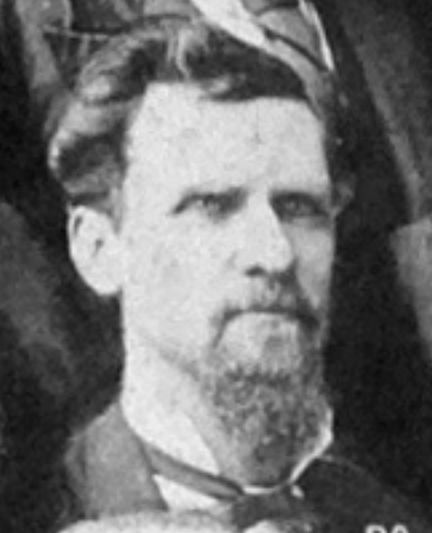
John R. Beasley (friends awarded him the title “Colonel”14), a Confederate veteran,15 was eight years older than Snodgrass.16 Yet like the chief justice, Beasley’s political career was defined by the state bond indebtedness amassed from aid to railroads in the 1850s and reaching reckless proportions during Reconstruction.17
 |
|
John R. Beasley
|
According to Snodgrass, the two Democrat lawyers “knew each other well” from their service in the State House, their relationship being “pleasant but not intimate.”18 Beasley, from Franklin County,19 joined the fringe advocating radical policies such as opposition to government bonds, support of inflationary printing of currency and repudiation of the state debt.20 Beasley was quiet but “very fond of talking about the money question, and to everybody who would listen to him he would talk at great length.”21
In 1882, Beasley won the Greenback Party nomination for governor at its state convention in Nashville22 and campaigned statewide, but his small crowds were of the curious, not the committed.23 At a rally in Nashville, 200 attended but no one applauded when he concluded his speech.24 Moreover, his press coverage was brutal. The Jackson Tribune and Sun said, “he is an entire stranger to the truth,”25 and The Daily Memphis Avalanche called Beasley a “financial lunatic.”26
However, the political coup de grâce came when his atheism was revealed and he was labeled an “infidel.”27 He asserted the notion of the soul’s immortality was devised by Plato “for the purpose of reconciling the poor to the burdens placed on them by the rich.”28 On election day, Beasley garnered 9,660 votes out of 228,279 cast.29 He ran for Congress in 1884 with no better luck.30
Still fixated on the state debt and favoritism to railroads, Beasley lost two cases in the Tennessee Supreme Court, the first in 1883 representing Franklin County regarding taxation of railroads
and the second challenging the constitutionality of a tax funding the state debt he claimed benefited the railroads, not the taxpayers.31 This suit was filed in Davidson County Chancery in 1883 on behalf of named taxpayers and tried in 1887. Beasley later said he labored on his opening statement over the four-year delay, but he lost. At the Supreme Court, with Snodgrass on the bench with his four colleagues, Beasley’s appeal was dismissed at the close of argument by a unanimous oral ruling delivered by then Chief Justice Peter Turney.32
‘Judge, for Heaven’s Sake Don’t Murder Me’
After vanishing for a time,33 Beasley reappeared in Chattanooga in the early 1890s representing bars34 and suing a widow for fees.35 He was often called a “crank.”36 Perhaps justifying the description, on Dec. 16, 1895, he inexplicably published an article in the Chattanooga Daily Times titled “Some Tennessee History.” He wrote that years before, in his second Supreme Court case, before being “summarily kicked out of court,” the justices violated their oath by rendering a “political decision,” and Justice Snodgrass divulged it from the bench saying, “the two wings of the democratic party had agreed upon this settlement of the railroad debt.”37
After reading the article that morning, an “exasperated (his word)” Chief Justice, and “very greatly incensed by the injustice” to himself and the court,went to the Times Building where the newspaper and the law firm of Brown and Spurlock were located.38 He testified his “double reason” was to ascertain if the article, “written by some crank on the outside,” was printed in error, for he “did not know the paper was hostile,” and to confer with Frank Spurlock about convincing the Times to print a retraction (Spurlock’s partner was Congressman F. V. Brown).39
When told Spurlock would not be in until noon, Snodgrass went about other business, including window shopping, then returned to Spurlock’s second floor office in the Times Building. He was surprised to find Beasley sitting at one end of a sofa in the corner reviewing depositions with Joe Williams, a young lawyer, who was also on the sofa closer to the door and Snodgrass.40
Williams offered a chair, but Snodgrass walked toward Beasley and said, “Mr. Beasley, you published that article in the Times in reference to me, did you not?” Beasley confessed. Snodgrass called it a “cowardly and malicious falsehood.” Unlike Snodgrass, Williams and Beasley testified the “angry” and “excited” chief justice said the article was a “G-- D----- lie.” All agreed Beasley jumped to his feet and replied, “No, sir, every word in it is so, and all of it, nothing but the truth.”41
The chief justice then struck Beasley in the face with his left hand. Snodgrass said Beasley next struggled unsuccessfully to remove something from his pocket, but that was denied by Beasley. Williams said Beasley made no move to defend himself and kept one hand in his overcoat. Saying he feared Beasley was trying to pull a gun, Snodgrass drew a pistol from his pocket, frantically fired one bullet into the ceiling and a second into Beasley’s arm. Snodgrass testified Beasley cried two or three times: “Judge, don’t kill me, don’t kill me.”42
Beasley testified his words were: “Judge, for heaven’s sake don’t murder me.” Two men rushed in, and the chief justice agreed to their request to do nothing further but warned them to stay back. The men eventually took Snodgrass to another room, and two doctors hurried in to help Beasley, then took him to one of the physicians’ offices in the building.43 The bullet entered Beasley’s left arm at the wrist and exited near the elbow. The press reported Beasley “seriously hurt, but not fatally.”44
The Chief Justice Arrested
The chief justice was taken by a group of lawyers to the clerk and master’s office in the nearby courthouse. A law officer tracked the group from the Times Building to Chancery. On finding his suspect, he said: “I am sorry I have a most unpleasant duty to perform in serving this warrant on our chief justice.” Snodgrass replied: “That is alright, sir. I am always glad to see an officer perform his duty, agreeable or not. I will try to not make this one disagreeable.” After arrest and a hearing, Snodgrass was released on a $1,000 bond with the clerk and master and numerous lawyers signing as sureties.45
Newspapers went wild. A common headline was “CHIEF JUSTICE SNODGRASS ARRESTED.”46 The Chicago Chronicle went with “SHOT BY A CHIEF JUSTICE.”47 The Morristown paper named it “THE SNODGRASS OUTRAGE,” terming it a “cool, deliberate act” and censuring his profane language.48 A Marion County paper’s lead was “THE SNODGRASS METHOD,” explained as “You are a G-d D-n--d liar! Bang! Bang! Lawyer falls and the court adjourns for the chief justice to receive the congratulations of his associate pistoleers.49 In the same vein, the Chicago News warned “the Tennessee Supreme Court will uphold its dignity if it has to lick every lawyer at the bar to do it.”50
The press feeding frenzy grew. A New York City newspaper said, “It looks as though the good old-fashioned 32 caliber revolver still outweighed Blackstone in the jurisprudence of Tennessee.”51 The Boston Herald stated, “The chief justice of Tennessee carries his law in his pocket.”52 Many noted the illegality of carrying concealed weapons.53 One newspaper called on the governor to disarm Tennessee’s supreme court justices.54 Most called for resignation or impeachment.55
There were, however, a few dissenting views. A Haywood County paper opposed removal saying, “It is only natural of him to resent an insult.”56 And the Jonesborough paper familiar with the victim “enthusiastically commended Chief Justice Snodgrass.”57 The evenhanded Nashville Banner advised that both Snodgrass and Beasley be sent to an asylum.58
Indictment, Rearrest, Three Trials and an Appeal
On Jan. 9, 1896, Snodgrass, called by an unsupportive editor the jurist “with a murderous gleam in his eye,”59 was indicted for carrying a concealed weapon and felonious assault “with malice aforethought to murder and kill.”60 A Morristown headline announced: “GRAND JURY GOT HIM!” The same day, Circuit Judge John Austin Moon issued a “show cause” for John Beasley to appear at a contempt hearing after Beasley had the county constable execute another warrant and rearrest Snodgrass at his home. Since the chief justice was already under bond, he was released by Moon on habeas corpus.61 Speaking of Beasley’s stunt, the Memphis Commercial Appeal said, “the court should call him down with a shotgun.”62 Nothing came of the contempt charge.
Even though initial reports called Beasley’s injury a “flesh wound,”63 as the criminal trial date approached, he was described as “suffering intensely”64 “decrepit,”65 “an invalid from the wound,”66 “not healing very rapidly,”67 undergoing multiple surgeries68 and even “at the point of death.”69 Nevertheless, Beasley gave press interviews to all comers (as did Snodgrass) and he led a walkout by a tiny minority at a radical group’s political convention in Nashville.70
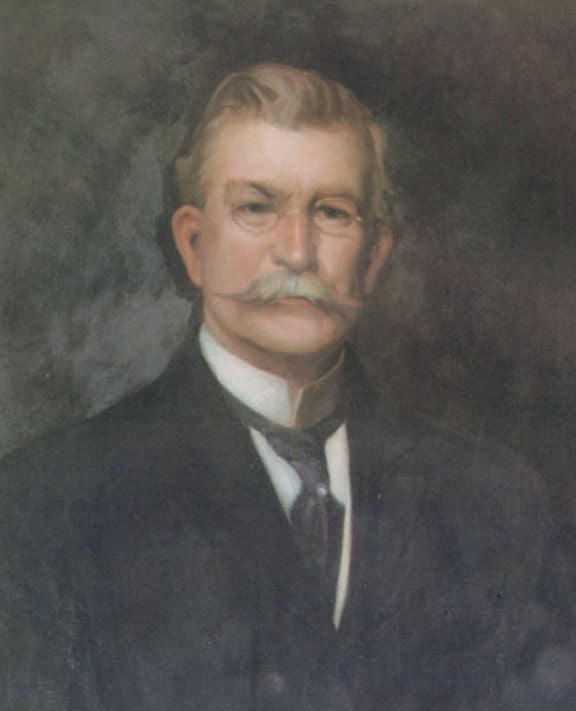
At least 60 lawyers volunteered to represent Snodgrass.71 He assembled a prestigious defense team of eight area attorneys.72 Nevertheless, on the first day of trial, May 19, 1896, the chief justice and his lawyers spotted Luke Wright in the audience, Tennessee’s preeminent lawyer (he handled 15 cases before the U.S. Supreme Court), who had traveled from Memphis to watch the trial and show his support for Snodgrass. They persuaded him to take command of their cause. Wright’s strategy: Keep the focus on Beasley, not Snodgrass.73
The great trial began before Judge Moon, who was in the middle of a campaign for Congress. A small boy was brought to the courtroom to draw names of prospective jurors.74 Snodgrass, Williams and Beasley, who displayed his discolored arm to the jury, testified.75
 |
|
Judge John Austin Moon
|
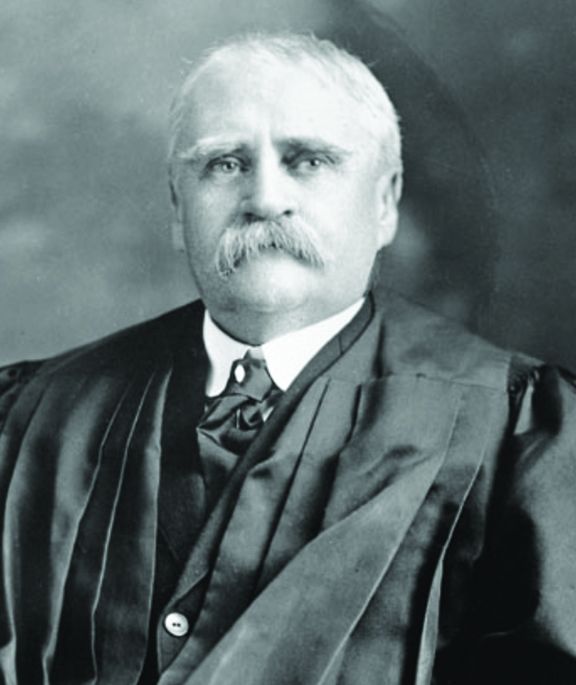
Governor Turney, who was chief justice when the criticized case was decided, provided an evidentiary deposition assuring the decision was not political and Snodgrass had been defamed. The same was offered from Judge Horace Lurton of the Sixth Circuit Court of Appeals (future U.S. Supreme Court justice). Lurton had also been on the Tennessee Supreme Court at the time. U.S. District Judge Charles Clark, Snodgrass’s former partner, testified as a character witness. There were many minor witnesses.76
Wright suggested waving closing argument, but the prosecution insisted. Each side was allotted three hours, and multiple attorneys from both sides argued.77 Late in the night, the “steel-eyed and steel-voiced”78 Wright unleashed a spellbinding oration and alluded to Beasley’s atheism.79 Then another defense attorney took the baton and kept pounding away on Beasley. Finally, Beasley snapped, rose among the spectators, objected to the personal attacks and begged “the court for protection.” The pleased defense apologized if it went outside the record and ended its argument.80
 |
|
Judge Horace H. Lurton
of Clarksville
|
After a three-day trial, the jury was apparently convinced Beasley provoked the shooting and returned a verdict of not guilty.81 The Maryville Times was dumfounded there was not at least a weapons charge conviction.82 Condemning the verdict, as many did,83 The Knoxville Journal said, “If the chief justice wants to shoot anybody, why his victims must not disturb the dignity of the occasion by indulging in any sort of demonstration.”84
It was rumored “Fighting Judge” Snodgrass85 would file a libel suit but never did.86 Beasley filed a personal injury action for $10,000.87 A mistrial occurred because a lone holdout wanted to award the plaintiff $250.88 The second trial resulted in a defense verdict affirmed by the Supreme Court on oral ruling of a special judge.89 He held “if Snodgrass honestly believed Beasley was about to shoot him, he had a right to shoot Beasley.”90 The Tennessean advised to “keep on good terms with the judiciary.”91
 |
|
Luke E. Wright of Memphis
|
The Aftermath
Judge Moon was elected to Congress.92 Luke Wright became America’s first ambassador to Japan, governor-general of the Philippines and in 1908 Theodore Roosevelt’s secretary of war.93
Chief Justice David Snodgrass unsuccessfully ran for the Democratic nomination for the U.S. Senate in 190094 and left the court after 16 years in 1902. He practiced law in Chattanooga until Judge Clark appointed him clerk of the U.S. District Court in 1905, serving a decade and dying in 1917.95
John Beasley moved to Arkansas and unsuccessfully ran for that state’s Court of Appeals in 1902.96 He returned to Chattanooga, gave speeches and passed into obscurity.97 |||
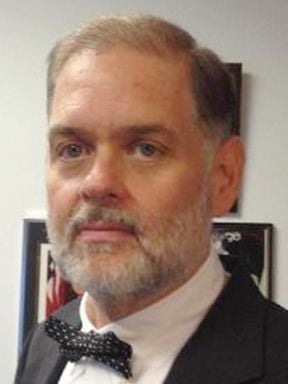 RUSSELL FOWLER is director of litigation and advocacy at Legal Aid of East Tennessee (LAET), and since 1999 he has been adjunct professor of political science at the University of Tennessee at Chattanooga. He served as the law clerk to Chancellor C. Neal Small in Memphis and earned his law degree at the University of Memphis in 1987. Fowler has written for many publications on law and legal history.
NOTES
1. See “Dr. Thomas Snodgrass,” Knoxville Sentinel, Sept. 23, 1898, p. 1.
2. Crutchfield, James A., Timeless Tennesseans, 150 (1984).
3. Green, John W., Lives of the Judges of the Supreme Court of Tennessee, 224 (1947).
4. Id.
5. Brown, R. Ben, “The Tennessee Supreme Court During Reconstruction and Redemption” in A History of the Tennessee Supreme Court, 150 (James W. Ely ed., 2002).
6. Id.; Chattanooga Daily Times, Dec. 18, 1894 p. 1; Snodgrass said he moved to Chattanooga in 1882 in The Journal and Tribune (Knoxville), May 21, 1896, p. 4.
7. Green at 224; Crutchfield at 150.
8. Green at 225; Chattanooga Daily Times, March 19, 1894 p. 1; Commercial Appeal (Memphis), Sept. 12, 1894 p. 5; The Comet (Johnson City), Mar. 24, 1894 p. 6.
9. Chattanooga Daily Times, Mar. 24, 1893, p. 4.
10. Id. Sept. 16, 1894, p. 16.
11. Id.
12. See Green at 225-26.
13. Id. at 226.
14. Journal and Tribune (Knoxville), Dec. 17, 1895, p. 1.
15. See Chattanooga Press, Mar. 27, 1896, p. 4.
16. Journal and Tribune (Knoxville), May 21, 1896, p. 4.
17. See Bergeron, Paul H., Paths to the Past, 70 (1979).
18. Journal and Tribune (Knoxville), May 21, 1896, p. 4.
19. Bristol News (Bristol, Tenn.), Nov. 16, 1880, p. 1.
20. See Tribune and Sun (Jackson, Tenn.), Apr. 13, 1879, p. 4; Chattanooga Daily Times, Mar. 21, 1890, p. 5; Nashville Banner, June 13, 1882, p. 4; The Tennessean (Nashville), July 25, 1882, p. 4; Semi-Weekly Gazette (York, Penn.), Feb. 5, 1896, p. 6; Robert E. Corlew, Tennessee: A Short History ,381 (1981); Phillip Langsdon, Tennessee: A Political History, 204 (2000).
21. Journal and Tribune (Knoxville), Dec. 17, 1895, p. 1.
22. Nashville Banner, June 13, 1882, p. 4; Daily Memphis Avalanche, June 13, 1882, p. 1.
23. See Clarksville Weekly Chronicle, July 29, 1882, p. 2.
24. The Tennessean (Nashville), July 25, 1882, p. 4.
25. Tribune and Sun (Jackson, Tenn.), Aug. 19, 1880, p. 4.
26. Clarksville Weekly Chronicle, July 29, 1882, p. 2.
27. Id.
28. Daily Memphis Avalanche, Aug. 20, 1882, p. 2.
29. Langsdon, Phillip, Tennessee: A Political History, 210 (2000).
30. See Weekly Public Ledger (Memphis), 9 Dept. 1884, p. 2.
31. Franklin County v. Nashville C. & S. L. Railway, 80 Tenn. 521 (1883).
32. Chattanooga Daily Times, Dec. 16, 1895, p. 2.
33. Memphis Avalanche, May 29, 1885, p. 4.
34. Chattanooga Commercial, July 24, 1886, p. 2.
35. Chattanooga Daily Times, June 26, 1892, p. 4.
36. See Morristown Republican, Jan. 11, 1896, p. 1; Semi-Weekly Gazette (York, Penn.); Feb. 5, 1896, p. 6.
37. Chattanooga Daily Times, Dec. 16, 1895, p. 2.
38. Journal and Tribune, (Knoxville) Dec. 17, 1895, p. 1.
39. Id. (Knoxville) Dec. 21, 1896, p. 4.
40. Id.; (Times Building Directory: Brown and Spurlock was located on 2nd floor Chattanooga Daily Times, Sept. 21, 1895 p. 12).
41. Journal and Tribune (Knoxville), Dec. 21, 1896, p. 4.
42. Id.
43. Id.
44. Hutchinson News (Hutchinson, Kan.), Dec. 16, 1895, p. 1; Buffalo Commercial (Buffalo, N.Y.), Dec. 16, 1895, p. 1.
45. Journal and Tribune (Knoxville), Dec. 21, 1896, p. 4.
46. See, e.g., Carlisle Evening Herald (Carlisle, Penn.), Dec. 31, 1895, p. 2; Morning Post (Camden, N.J.), Dec. 13, 1985, p. 2.
47. Quoted in Nashville Banner, Dec. 24, 1895, p. 6.
48. Morristown Republican, Jan. 11, 1896, p. 1.
49. South Pittsburg Republican quoted in the Nashville Banner, Dec. 24, 1895, p. 6.
50. Chicago News quoted in Herald and Tribune, (Jonesborough) Jan. 1, 1896, p. 1.
51. New York Mail and Express quoted in Morristown Republican, Dec. 28, 1895, p. 2
52. Quoted in Nashville Banner, Dec. 24, 1895, p. 6.
53. See, e.g., Journal and Tribune (Knoxville), Dec. 24, 1895, p. 12.
54. Brunswick Advertiser (Ga.) quoted in Chattanooga Daily Times, Dec. 22, 1895, p. 12.
55. See, e.g., Nashville Banner, Dec. 24, 1895, p. 6; Morristown Republican, Dec. 28 ,1895, p. 2; Herald and Tribune (Jonesborough), Jan. 1, 1896, p. 1.
56. Brownsville States-Democrat (Tenn.) quoted in Chattanooga Daily Times, Dec. 22, 1895, p. 12.
57. Herald and Tribune (Jonesborough), May 20, 1896, p. 2.
58. Nashville Banner, Dec. 24, 1895, p. 6.
59. Morristown Republican, Jan. 4, 1896, p. 1.
60. Id. at Jan. 18, 1896, p. 1.
61. Morristown Republican, Jan. 8, 1896, p. 1.
62. Commercial Appeal (Memphis), Jan. 11, 1896, p. 4.
63. Olney Advocate (Olney, Ill.), Dec. 26, 1895, p. 2.
64. Journal and Tribune (Knoxville), Dec. 17, 1895, p. 1.
65. Chattanooga Press, Mar. 27, 1896, p. 4.
66. Id. May 29, 1896, p. 6.
67. Id. Mar. 13, 1896, p. 1.
68. See Nashville Banner, Sept. 11, 1896, p. 4.
69. Nashville Banner, May 27, 1896, p. 4.
70. The Tennessean (Nashville), July 29, 1896, p. 1.
71. Chattanooga Times, Dec. 22, 1895, p. 12.
72. See St. Louis Globe-Democrat, May 20, 1896, p. 3.
73. See Chattanooga Daily Times, May 21, 1896, p. 6.
74. Baltimore Sun, Mar. 18, 1897, p. 2.
75. Chattanooga Daily Times, May 21, 1896, p. 3, 6.
76. Id.
77. Id. May 21, 1896, p. 6.
78. Commercial Appeal (Memphis), Oct. 31, 1902, p. 4.
79. Chattanooga Daily Times, May 21, 1896, p. 6.
80. See id. May 21, 1896, p. 3.
81. Chattanooga Press, May 29, 1896, p. 6.
82. Maryville Times, June 4, 1896, p. 2.
83. Chattanooga Press, May 29, 1896, p. 6.
84. Knoxville Journal quoted in Nashville Banner, May 27, 1896, p. 4.
85. Buffalo Commercial, Dec. 16, 1895, p. 1.
86. Knoxville Sentinel, May 21, 1896, p. 1.
87. Journal and Tribune (Knoxville), Mar. 13, 1896, p. 2; Commercial Appeal (Memphis), Mar. 13, 1896, p. 1; The Tennessean, Mar. 13, 1896, p. 8.
88. Chattanooga Times, Mar. 4, 1897, p. 8.
89. Id. Mar. 3, 1897, p. 5; Commercial Appeal (Memphis), Nov. 18, 1897 p. 1; Times-Democrat (New Orleans), Nov. 19, 1897, p. 7.
90. See Chattanooga News, July 21, 1915, p. 5.
91. The Tennessean, Jan. 3, 1898, p. 4.
92. Crutchfield at 116.
93. Id. at 169; Knoxville Sentinel, Jan. 24, 1906, p. 4; Biographical Directory of the United States Executive Branch 370 (Robert Sobel, ed. 1977).
94. Knoxville Sentinel, Aug. 10, 1900, p. 7.
95. Chattanooga News, Oct. 13, 1917, p. 12; Green at 227.
96. Chattanooga Times, Feb. 19, 1902, p. 6.
97. See Chattanooga News, Sept. 20, 1913, p. 4.

 MEMBER CENTER
